
The Nagmati Programme
A water-positive framework for data centers in India
Watershed accounting. Liquid cooling with dry heat rejection. Why PUE alone is not enough.
Abstract
A conventional gigawatt-class AI campus, cooled by evaporating water in cooling towers, moves through four to fifteen billion litres of water a year. The number depends on the cooling architecture and on how honest the accounting is. PUE has been the industry default metric for twenty years. It says nothing about that water. It also stays silent on the water embedded in the electricity the facility buys. This paper proposes a more honest accounting. It separates three layers of water responsibility: on-site use, water embedded in electricity, and watershed-scale impact in the geography of operation. It also introduces the Nagmati Programme, which is the commitment HyperNext made on World Environment Day 2025 to restore more watershed capacity than the company consumes. Under this accounting HyperNext's own on-site cooling water is effectively zero, because every campus uses a sealed glycol cooling loop with dry heat rejection rather than evaporative cooling, and recycles building-services water on site. The framework is non-proprietary. We hope other Indian operators pick it up.
Contents
- 011. Why this paper
- 022. The accounting
- 033. The Nagmati Programme
- 044. The harder questions
- 055. What other operators should consider
- 066. Methodology: how we built the WUE-3 framework
- 077. Three watershed projects: what each one actually does
- 088. Verification protocol
- 099. References and sources
Request the full paper
The complete paper, including all figures, tables, references, and citations, is available as PDF. Enter your details to receive it.
Request paper · HN-RP-001.pdfKey findings
- Site meter water typically captures 25 to 35 percent of the actual footprint. The rest sits in electricity supply and watershed impact.
- Replacing evaporative cooling with closed-loop glycol liquid cooling and dry heat rejection, the HyperNext approach, effectively eliminates the on-site cooling-water layer, because a sealed glycol loop and dry coolers consume no water. The PUE cost is small, roughly 0.05 to 0.10.
- Going from thermal grid to renewable PPA cuts layer two by about 98 percent. Cost depends on the local renewable market.
- Together those two moves take a conventional gigawatt-class campus from as much as fifteen billion litres a year down to almost nothing. On-site cooling water falls to effectively zero, and the small residual sits in embedded electricity, which the renewable supply also removes. Watershed restoration sits on top of that.
Field documentation
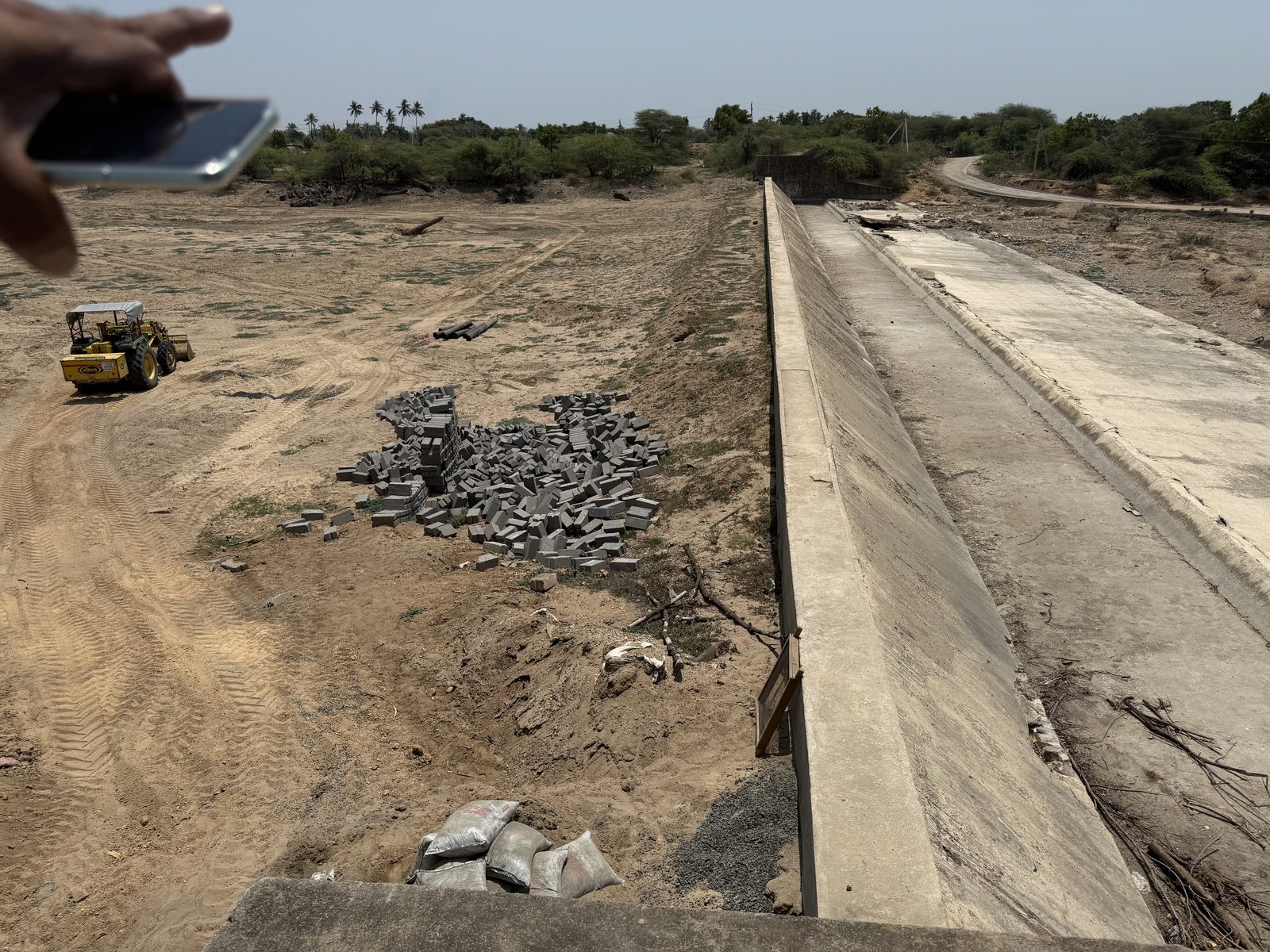
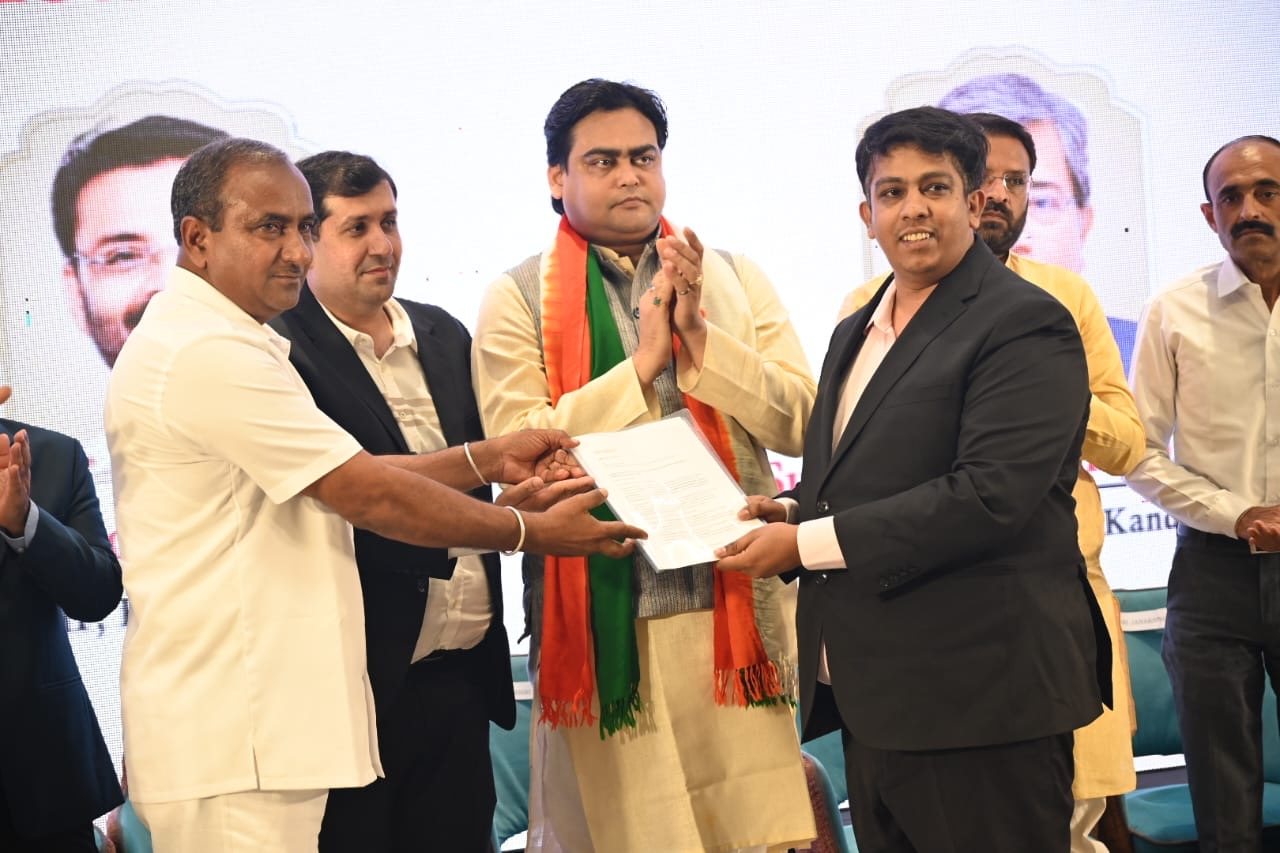
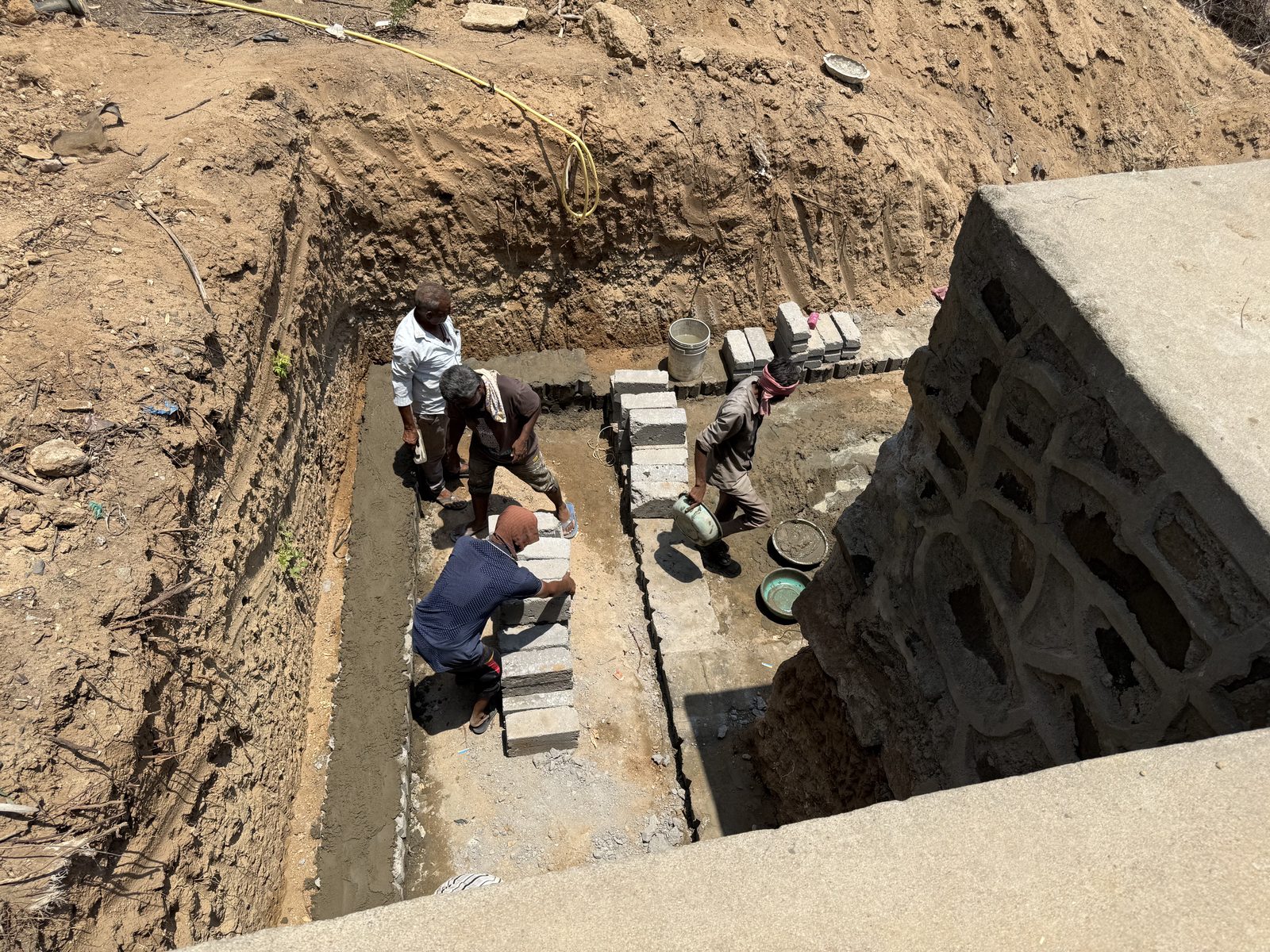
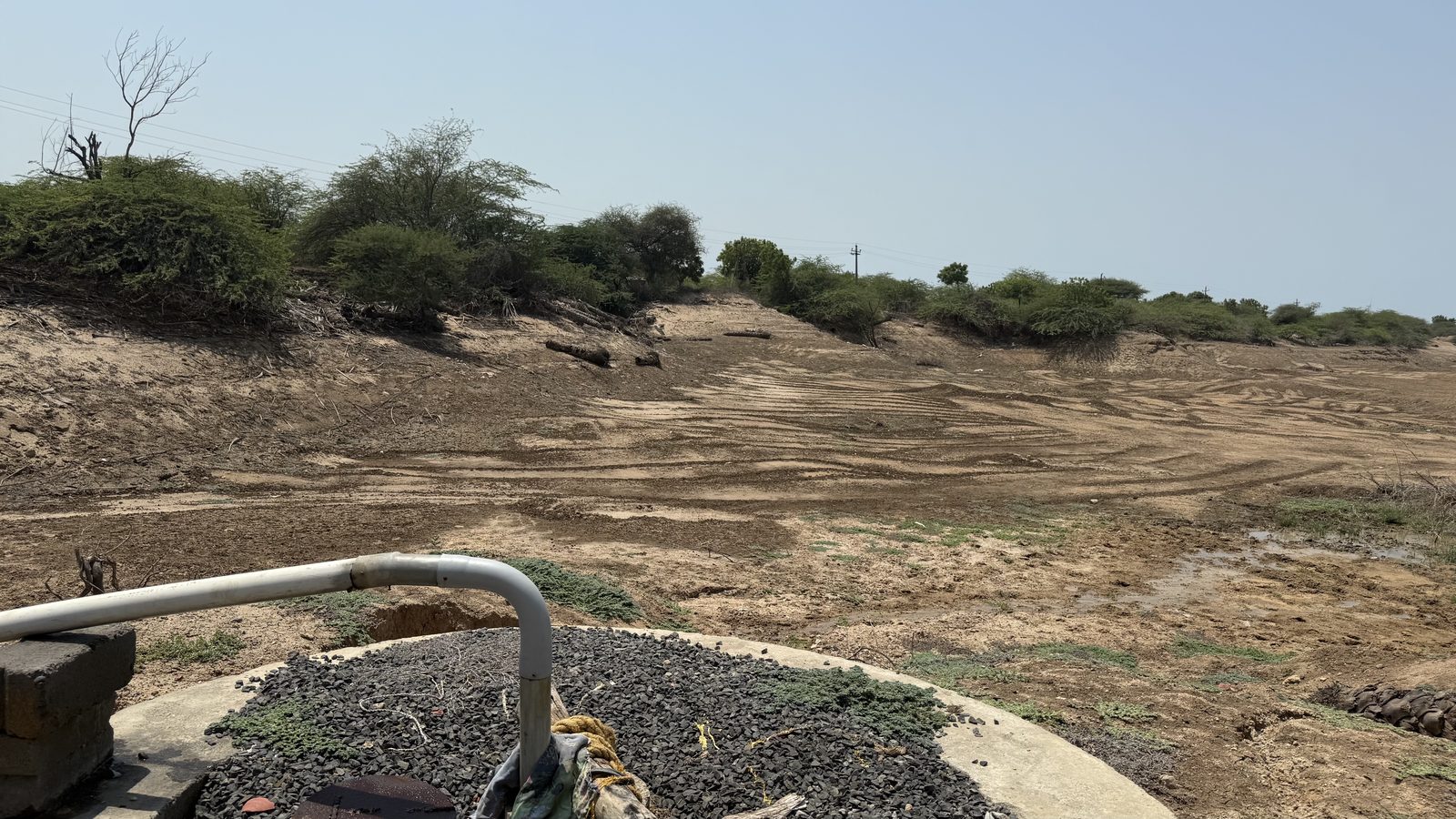
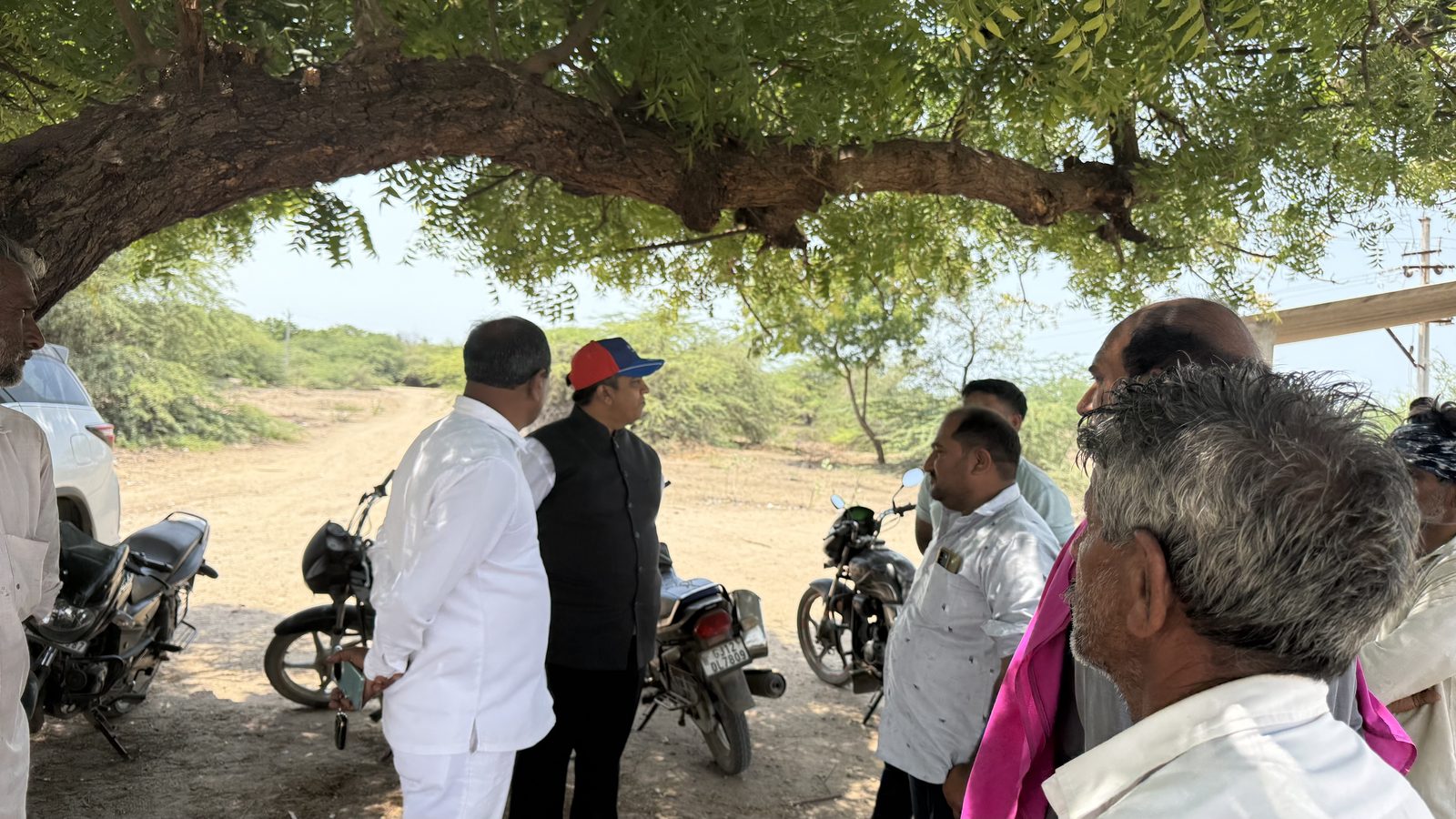
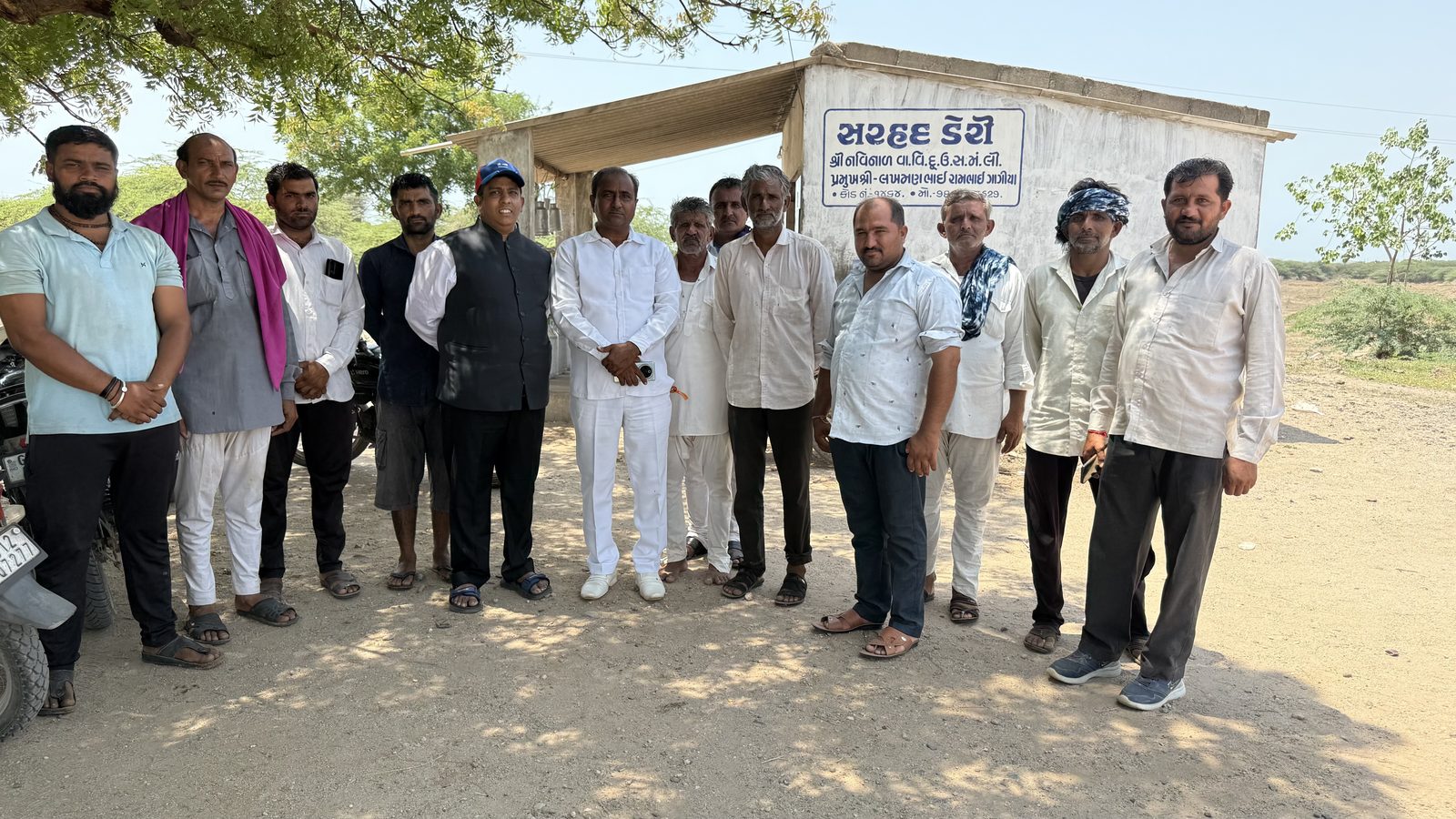
Watershed restoration is measured on the ground, not on a slide. The images below document the first phase of the Nagmati Programme in Kutch, Gujarat: from the ₹5 crore CSR commitment that funds it, to the recharge structures built across the seasonal channel and the site reviews carried out with the local community ahead of the monsoon.
Reference this paper
HyperNext Research. (05 June 2025). The Nagmati Programme: A water-positive framework for data centers in India. HyperNext Data Center Limited. HN-RP-001. Retrieved from https://www.hypernxt.com/research/hn-rp-001
@techreport{hypernext_hn_rp_001,
  title = {The Nagmati Programme: A water-positive framework for data centers in India},
  author = {HyperNext Research},
  institution = {HyperNext Data Center Limited},
  number = {HN-RP-001},
  year = {2025},
  url = {https://www.hypernxt.com/research/hn-rp-001}
}